What is the correct answer to the lac operon NEET 2022 question?
The lac operon NEET 2022 question has option D as the correct answer. The mutant repressor cannot bind lactose or allolactose, so the inducer cannot inactivate it. The repressor remains attached to the operator, blocks transcription of the structural genes, and therefore prevents their translation.
- Exam: NEET 2022
- Subject: Biology
- Chapter: Genetics and Evolution
- Question type: Single correct
- Difficulty tier: Hard
- Expected solving time: 45 seconds
An E. coli strain has a mutation in its i gene. The altered gene produces a repressor that cannot bind lactose or allolactose, although lactose is available in the growth medium. Which outcome follows?
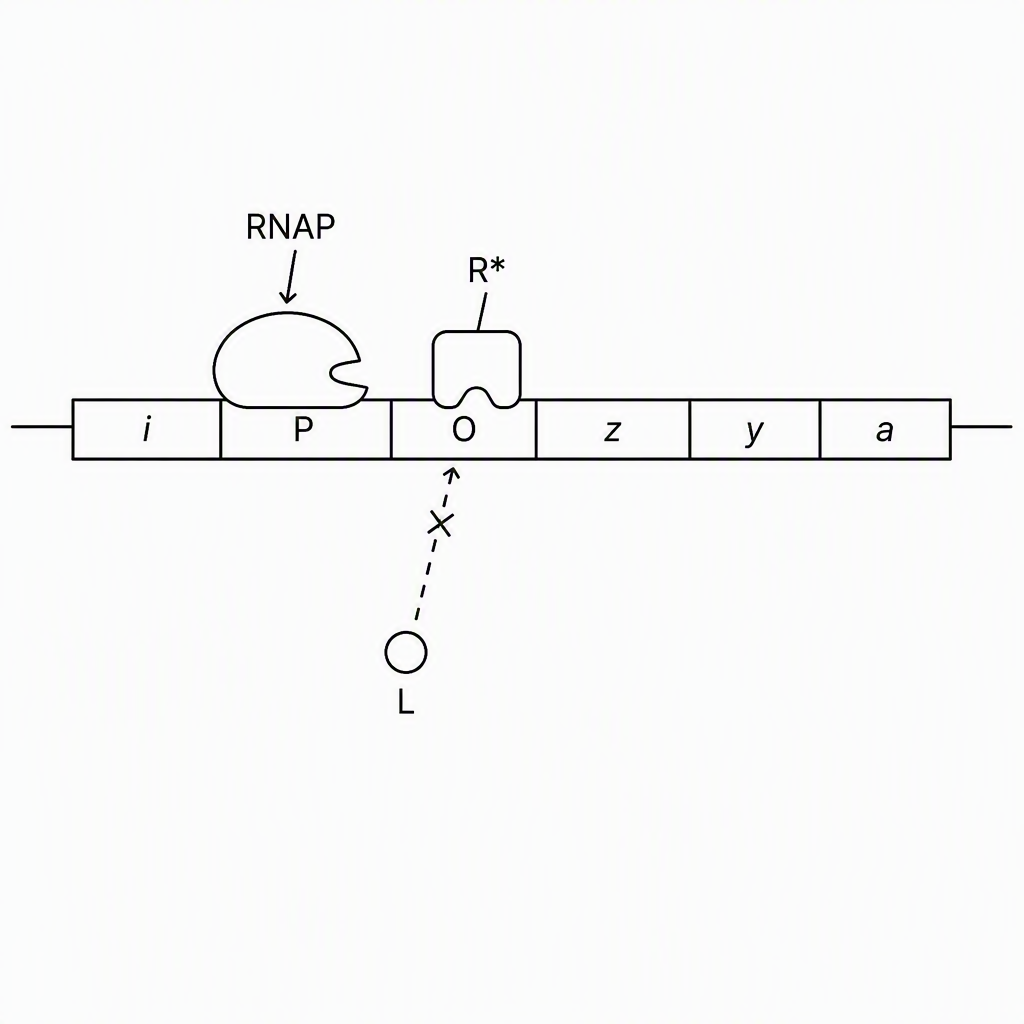
Analyse the mutation before considering the presence of lactose.
How does the mutant repressor block the lac operon?
The normal role of the i gene is to code for the lac repressor. The inducer normally binds the repressor and prevents it from remaining attached to the operator. In this mutant, the inducer cannot bind the repressor, so the active repressor continues to block the operator.
The decisive wording is cannot bind the inducer. It does not mean that the repressor cannot bind the operator. These are different molecular interactions, and confusing them reverses the answer.
What is the complete causal sequence in this PYQ?
The sequence begins with the lost inducer-repressor interaction and ends with the absence of structural-gene products. Follow each step in order. Do not jump directly from the presence of lactose to gene expression.
- Lactose or allolactose is present, but it cannot bind the mutant repressor.
The inducer therefore fails to inactivate the repressor.
- The active repressor remains bound to the operator.
Lactose cannot cause its removal because the required inducer-repressor interaction has been lost.
- Operator occupancy prevents transcription of the structural genes.
RNA polymerase cannot transcribe z, y and a.
- No polycistronic messenger RNA for the three structural genes is produced.
These three genes would normally be transcribed together as one messenger RNA.
- Without that messenger RNA, the corresponding proteins cannot be translated.
Translation requires a messenger RNA template.
One lac operon polycistronic messenger RNA contains three structural-gene coding regions. Here, the number of such transcripts produced is zero.
Therefore, option D is correct: the structural genes z, y and a will not be translated.
Why is option C wrong in the lac operon NEET 2022 question?
Option C treats lactose as an automatic ON signal and ignores the stated mutation. Lactose can induce a normal lac operon only when the inducer binds the repressor and frees the operator. That binding cannot occur in this mutant, so the repressor remains on the operator.
The faulty shortcut is:
This chain silently assumes a normal repressor that can bind the inducer. The mutation specifically destroys the inducer-repressor interaction. Lactose is present, but it cannot release the operator from repression.
Use this sequence for any lac operon mutation question:
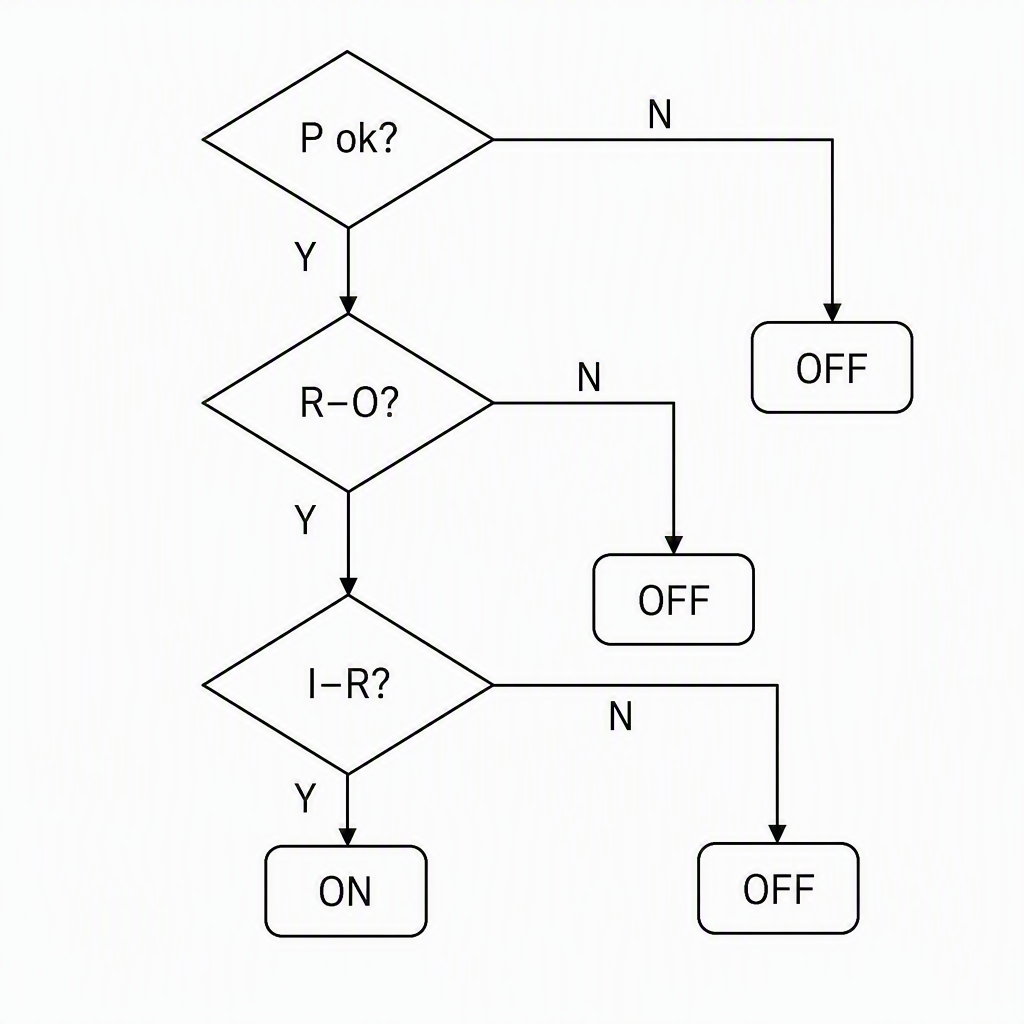
- Locate the mutation.
- Identify the affected product.
- Identify the molecular interaction that is lost.
- Determine whether the operator is occupied or free.
- Decide whether transcription occurs.
- Decide whether translation can follow.
How do related lac operon mutations affect gene expression?
Each mutation changes a different molecular interaction. Loss of inducer binding keeps the operator blocked. Loss of repressor function or operator binding leaves it free. Loss of promoter function prevents transcription regardless of operator status. Apply the mutation-first rule before checking whether lactose is present.
What happens if the i gene produces no functional repressor?
The genes z, y and a are expressed constitutively, even when lactose is absent. No functional repressor is available to occupy the operator, so the operator remains unblocked. Transcription can occur whenever the promoter and transcription machinery are functional.
What happens if the operator cannot bind the repressor?
The structural genes remain constitutively transcribed with or without lactose, provided the promoter and transcription machinery are functional. The repressor may be normal, but it has no functional operator site to occupy. Repression cannot be established.
What happens if RNA polymerase cannot functionally bind the promoter?
The genes z, y and a are not transcribed, even when lactose is present. A free operator cannot compensate for a defective promoter. Without functional RNA polymerase binding, transcription cannot begin, so the genes are not translated.
The compact comparison is:
- Defective inducer binding: The repressor remains on the operator, so the operon stays OFF.
- Defective repressor or operator binding: The operator remains free, so the operon stays ON, provided the promoter works.
- Defective promoter: Transcription cannot begin, so the operon stays OFF.
Which final clarifications prevent errors in this lac operon PYQ?
Transcription is the process blocked immediately in this mutant. Failure of translation is the downstream consequence because no structural-gene messenger RNA is produced. This distinction explains why option D is correct even though the first molecular block occurs during transcription.
NCERT commonly refers to lactose as the inducer. In the detailed mechanism, allolactose is the molecule that directly binds the lac repressor. Both terms lead to the same answer here because the mutant repressor cannot bind the inducer.
The structural genes encode:
- The z gene encodes β-galactosidase.
- The y gene encodes permease.
- The a gene encodes transacetylase.
Use this 45-second decision rule: ask whether the repressor can bind the operator, then ask whether the inducer can remove it. Here, the answers are yes and no, respectively, so transcription and translation of z, y and a remain blocked.
Next step: the past-paper archive on NEET JEEnius AI and search past NEET papers by year, subject or chapter, each with a worked solution (100 free searches a month).
Frequently asked questions
What is the correct answer to the lac operon NEET 2022 question?
Option D is correct. The mutant repressor cannot bind the inducer, so it remains attached to the operator and prevents transcription and subsequent translation of z, y and a.
Why does lactose not activate the mutant lac operon?
Lactose or allolactose cannot bind the mutant repressor. Therefore, the repressor stays active on the operator even when lactose is present.
Why is option C wrong in the lac operon NEET 2022 PYQ?
Option C assumes that lactose automatically switches the operon on. In this mutant, the inducer cannot remove the repressor from the operator, so z, y and a are not transcribed.
What happens if the lac operon repressor cannot bind the operator?
The operator remains free, causing constitutive transcription of z, y and a, provided the promoter functions normally. This occurs with or without lactose.