
What is the best free resource for Alternating Current NEET questions?
NEET JEEnius AI chapter-wise AC questions paired with 30 free full-length mocks per month is the best free option for most aspirants. It beats generic previous-year PDFs and YouTube sets on pattern match, explanation quality, and integration with timed 180-question papers. The 2025 pattern demands 45 single-correct Physics questions, +4/-1 marking, and offline OMR.
The platform’s solutions show exactly why one option is a trap on RMS versus peak values or why a calculation slip costs one mark. This setup translates directly into marks under real exam constraints.
How do I compare free Alternating Current resources for NEET?
Judge any resource yourself with these five criteria tied to the 180-minute, 720-mark exam. Each is scored out of 10 with justification based on the demands of 45 compulsory single-correct Physics questions.
- NEET JEEnius AI free questions
NEET Pattern Alignment: 9/10 – Matches post-2025 compulsory 45 Physics questions and +4/-1 marking exactly.
Solution Depth & Trap Coverage: 9/10 – Every answer explains phasor algebra and common calculation slips that trigger negative marking.
Difficulty Progression: 8/10 – Moves from basic RMS problems to combined LCR resonance in one sitting.
Update Frequency for 2026-27: 9/10 – Revised after each paper to reflect latest trap patterns.
Ease of Timed Practice: 9/10 – Built-in timer and instant scored breakdown prepare you for the 4-minute-per-question reality.
- NTA/previous year compilations
NEET Pattern Alignment: 4/10 – Heavy on pre-2021 Section B questions that no longer exist.
Solution Depth & Trap Coverage: 5/10 – Brief answers without discussion of power factor traps seen in recent papers.
Difficulty Progression: 6/10 – Jumps without logical order.
Update Frequency for 2026-27: 3/10 – Static collections unchanged for years.
Ease of Timed Practice: 4/10 – No timer or per-subject insight for the full 180-question paper.
- Allen/Aakash free PDFs
NEET Pattern Alignment: 6/10 – Closer to current format but still mixes old optional questions.
Solution Depth & Trap Coverage: 7/10 – Decent diagrams yet weak on explaining why students pick the wrong option in impedance matching.
Difficulty Progression: 7/10 – Structured but assumes coaching-level prior exposure.
Update Frequency for 2026-27: 5/10 – Updated only for their own students.
Ease of Timed Practice: 5/10 – PDF format forces separate stopwatch use, breaking exam rhythm.
- Physics Wallah YouTube sets
NEET Pattern Alignment: 7/10 – Recent videos follow single-correct style.
Solution Depth & Trap Coverage: 6/10 – Good for concepts but explanations rarely simulate -1 marking pressure on numerical slips.
Difficulty Progression: 8/10 – Logical order from theory to advanced.
Update Frequency for 2026-27: 8/10 – Frequent new uploads.
Ease of Timed Practice: 4/10 – Video pausing destroys the 15-minute chapter block needed to match Physics time share.
These scores reflect the reality of offline OMR where every wrong attempt costs one mark and time spent hunting for solutions eats into the 180 minutes.
Which AC practice resource should I choose for my stage?
Class 11 beginners should start with PW YouTube free sets then move to previous-year questions. This sequence prevents confusion between average and instantaneous values before attempting full mocks.
Class 12 targeting 600+ should use NEET JEEnius AI free AC bank for progressive difficulty before attempting 30 free full mocks monthly. The platform’s error analysis on resonance curve questions sharpens speed exactly where these students lose marks.
Droppers below 550 should prioritize our platform for error analysis and pair it with the 32-week study plan style revision. The recent 32-week dropper plan and the roadmap for scores below 550 both stress targeted chapter practice followed by immediate mock analysis. ALLEN 2027 repeater batches also follow similar structured revision.
Students weak in numericals must avoid bare PDFs. Choose resources with detailed phasor and impedance solutions that show every algebra step and flag calculation traps. NEET JEEnius AI solutions do this consistently, similar to the precise breakdown in the Redox Reactions and Electrochemistry NEET 202 permanganate question on this site.
Why do most free AC PDFs waste your time?
Most free PDFs still carry outdated questions from the pre-2021 Section B era that no longer match the compulsory single-correct format. You spend time solving problems that cannot appear in NEET 2025 or 2026, then discover in the actual paper that the marking scheme punishes every wrong numerical attempt with -1.
These resources ignore NEET-specific traps on RMS versus peak value, power factor in non-resistive circuits, and LC oscillations that have appeared repeatedly. Solutions rarely explain why option B looks correct but fails when you calculate the exact phase angle.
You also lose the scored breakdown that 30 free full-length mocks per month provide. Without it you cannot see how many minutes you actually spend on AC inside the 45 Physics questions or whether your accuracy drops under full-paper pressure. In contrast, the platform records every attempt and shows patterns across multiple tests.
Compare this to the detailed solution style in existing articles here such as the Redox Reactions and Electrochemistry NEET 202 permanganate question. That level of trap-by-trap explanation is what AC practice needs, yet most PDFs deliver one-line answers only.
How do I practise AC questions in 15 minutes and avoid negative marking?
Take 8-10 questions mixing theory and numerical exactly as the Physics section time share demands inside the 180-minute paper. Spend 90 seconds reading, 60 seconds on phasor sketch, and 30 seconds checking units. This rhythm prevents the common -1 from calculation slips.
For phasor diagrams, draw current as reference, mark voltage leads or lags with exact angle, then write the impedance equation before picking the option. Never calculate magnitude first; the angle decides most trap options. For resonance curve questions, note that maximum current occurs at resonant frequency and Q-factor tells sharpness; any option ignoring this is wrong.
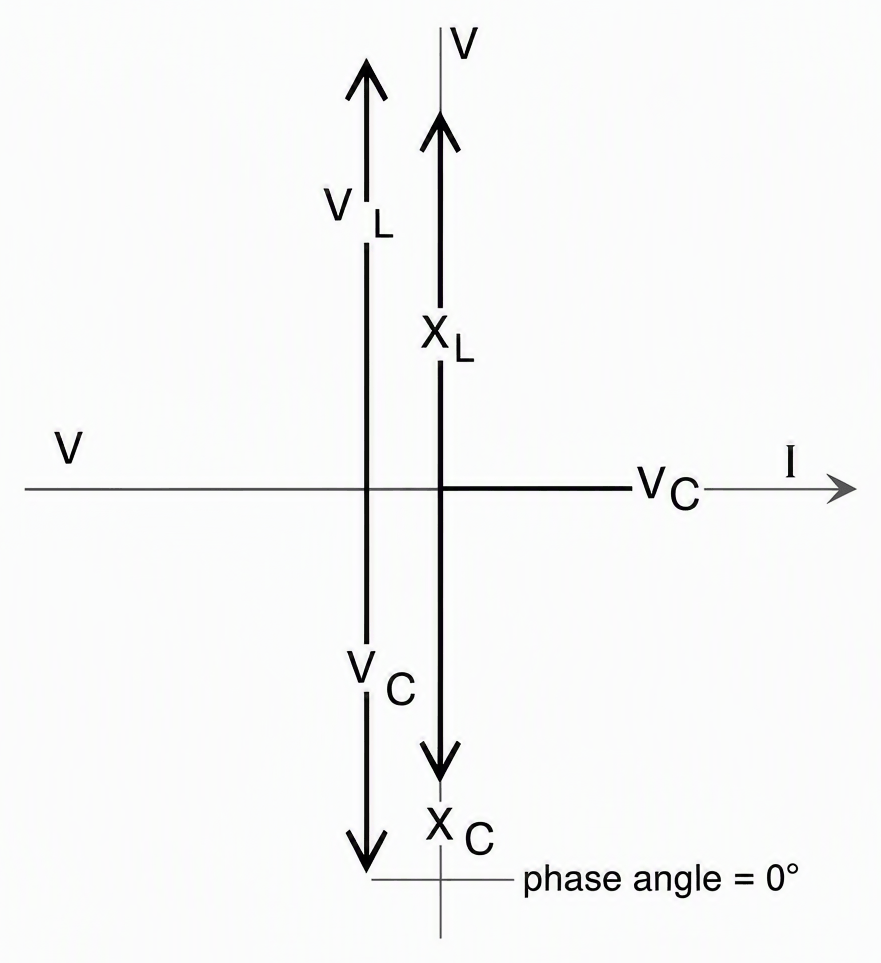
Practise this sequence on the NEET JEEnius AI bank. After each set, review every mistake within two minutes. Link this daily block to full-length 180-question mocks so stamina builds under real +4/-1 pressure. Track accuracy to improve under full exam constraints.
How should I integrate AC practice with full-length mocks and the long-term roadmap?
Use AC questions as warm-up before sitting a full 45-Physics mock from the 30 free monthly quota. Solve one 15-minute AC set, note weak areas, then attempt the complete 180-question, 720-mark, 180-minute paper and get a scored per-subject breakdown. This sequence turns chapter practice into exam skill.
Recent news confirms the 32-week study plan for NEET 2027 droppers and new ALLEN 2027 repeater batches both emphasise chapter-to-mock progression. The 2027 pattern changes make early familiarity with single-correct offline OMR even more important.
Confirmed dates are NEET 2025 on May 4 and the re-held NEET 2026 on June 21. Expect NEET 2027 around early May based on historical pattern. Shift from free chapter-wise practice to full syllabus papers once you finish the AC unit and two other high-weightage chapters. By December 2026 droppers should be attempting two full mocks weekly.
What final checklist must I complete for Alternating Current before NEET 2025-2027?
- Have you attempted at least 100 AC MCQs with -1 marking simulation?
- Can you finish AC unit in under 12 minutes in a full mock?
- Are all checklist items tied to official pattern of 45 Physics questions, +4/-1 marking, and offline OMR till 2026?
Complete this list, then start the next 15-minute set.
Next step: full-length mock tests on NEET JEEnius AI and sit a full 180-question, 720-mark, 180-minute paper, 45 Physics, 45 Chemistry and 90 Biology, and get a scored per-subject breakdown (30 free a month).
For a worked example of the same idea, see Organic Compounds Containing Nitrogen NEET 2026: Why Z is Ethanol.
Frequently asked questions
What is the best free resource for alternating current practice questions NEET?
NEET JEEnius AI chapter-wise AC questions paired with 30 free full-length mocks per month is the best option. It matches the compulsory 45 single-correct Physics questions with +4/-1 marking and gives deep explanations on phasor algebra, RMS traps and calculation slips that cause negative marking.
How do I practice alternating current questions in 15 minutes for NEET?
Solve 8-10 mixed theory and numerical questions in 15 minutes. Spend 90 seconds reading, 60 seconds drawing the phasor with current as reference and noting the exact phase angle, then 30 seconds verifying units. This prevents common -1 errors on impedance and resonance questions.
Why do most free AC PDFs waste time for NEET preparation?
Most free AC PDFs contain outdated pre-2021 Section B questions that no longer appear in the exam. They lack explanations for NEET-specific traps on power factor, RMS versus peak values and resonance curves, and provide no timer or scored breakdown for full 180-question papers.
Which AC resource is best for NEET droppers?
Droppers below 550 should use NEET JEEnius AI for its error analysis on resonance curve and impedance questions. Pair targeted chapter practice with the 32-week dropper plan and immediate full-mock review to build accuracy and speed under real +4/-1 offline OMR conditions.
How to compare free resources for alternating current practice questions NEET?
Score each resource out of 10 on five criteria: NEET pattern alignment, solution depth with trap coverage, difficulty progression, update frequency for 2026-27 and ease of timed practice. NEET JEEnius AI scores 9/10 on most while static PDFs and un-timed YouTube sets score far lower.